
India so far
Travel notes from Jaipur to the Ganges

This post is a little different from my usual ones. I’m currently traveling and wanted to share a few notes and observations from my time in India. I’m writing with some hesitation, as I’m very aware of how easily one can fall into cliché when speaking about this culture. Feedback and reflections are warmly welcome.
After reading Siddhartha and Love Letter to India, after discovering yoga 10 years ago and hearing my brother’s stories of his travels here, especially how everyone sings the songs at the cinema, I became obsessed with this land. India holds a special place in my heart. I was lucky enough to travel there a few times already, for tourism and work. I was also blessed to meet local activists, connections that grew into beautiful friendships. These few lines by no means capture what’s so uniquely indescribable about India; they’re simply an attempt to share some of the many impressions I gathered during my time here.
Jaipur.
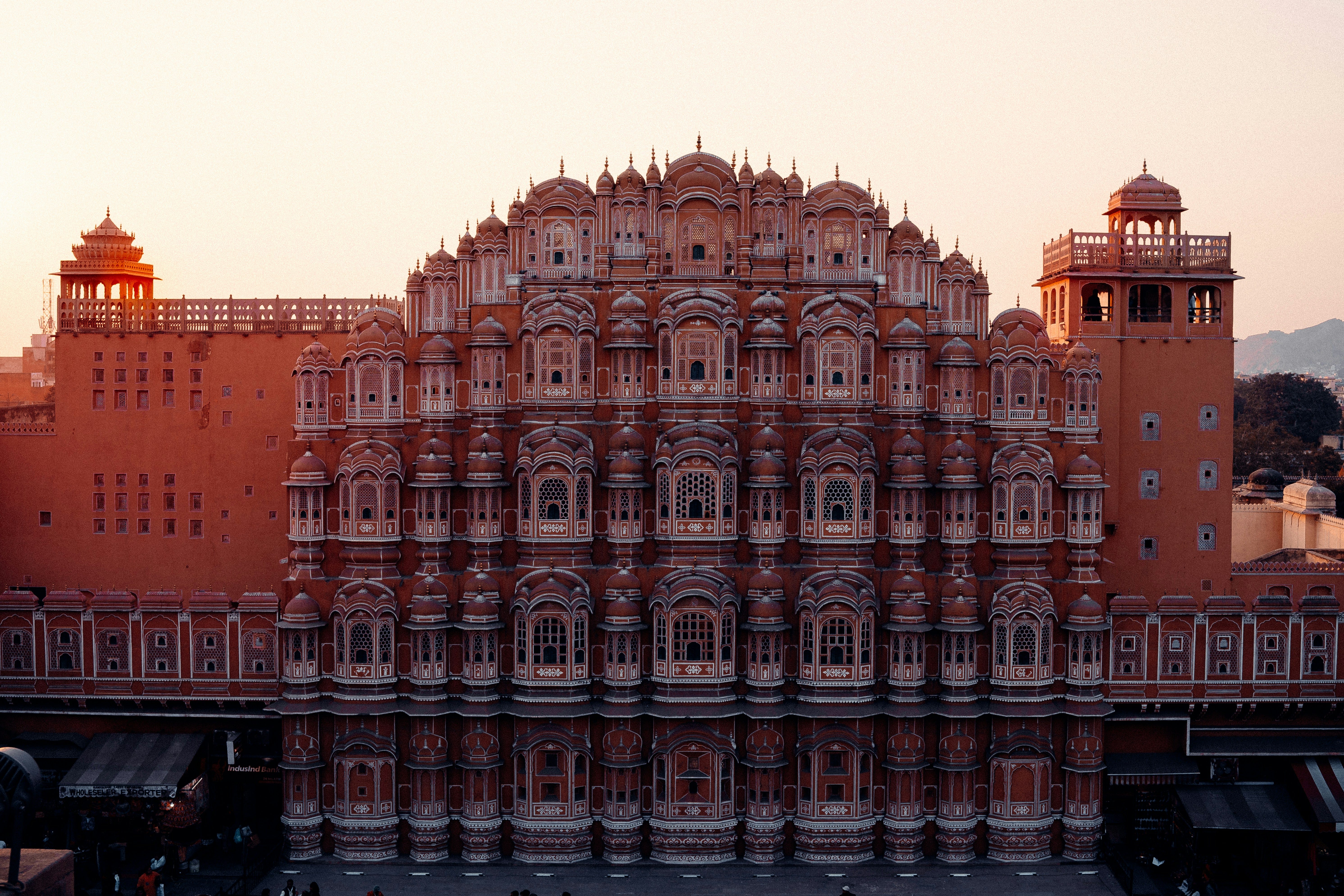
Melodious honking, loud speeches, firecrackers. The blend of Rajput and Mughal architecture, a city drenched in pink. Jharokhas (overhanging balconies) and jalis (lattice-screen windows) casting patterned light. Jaipur is explosive in its colour palettes, in its fusion of styles. We visited this gorgeous palace, Sisodia rani ka bagh / Queen Sisodia’s garden. An absolute delight.
My friends and I hadn’t met in a year. We reconvened in laughter, and as usual, sharing the state of our reflections. How do we reconcile the urge to do good with the longing to simply be well? We shared some ideas around community-building, secular ethics and interfaith practices. The atmosphere warmed as we played We’re Not Really Strangers, and as we became ever less so.
Credit: Dexter Fernandes
Dharamshala.
Thirteen hours by bus to reach this “neighboring” city to Delhi.
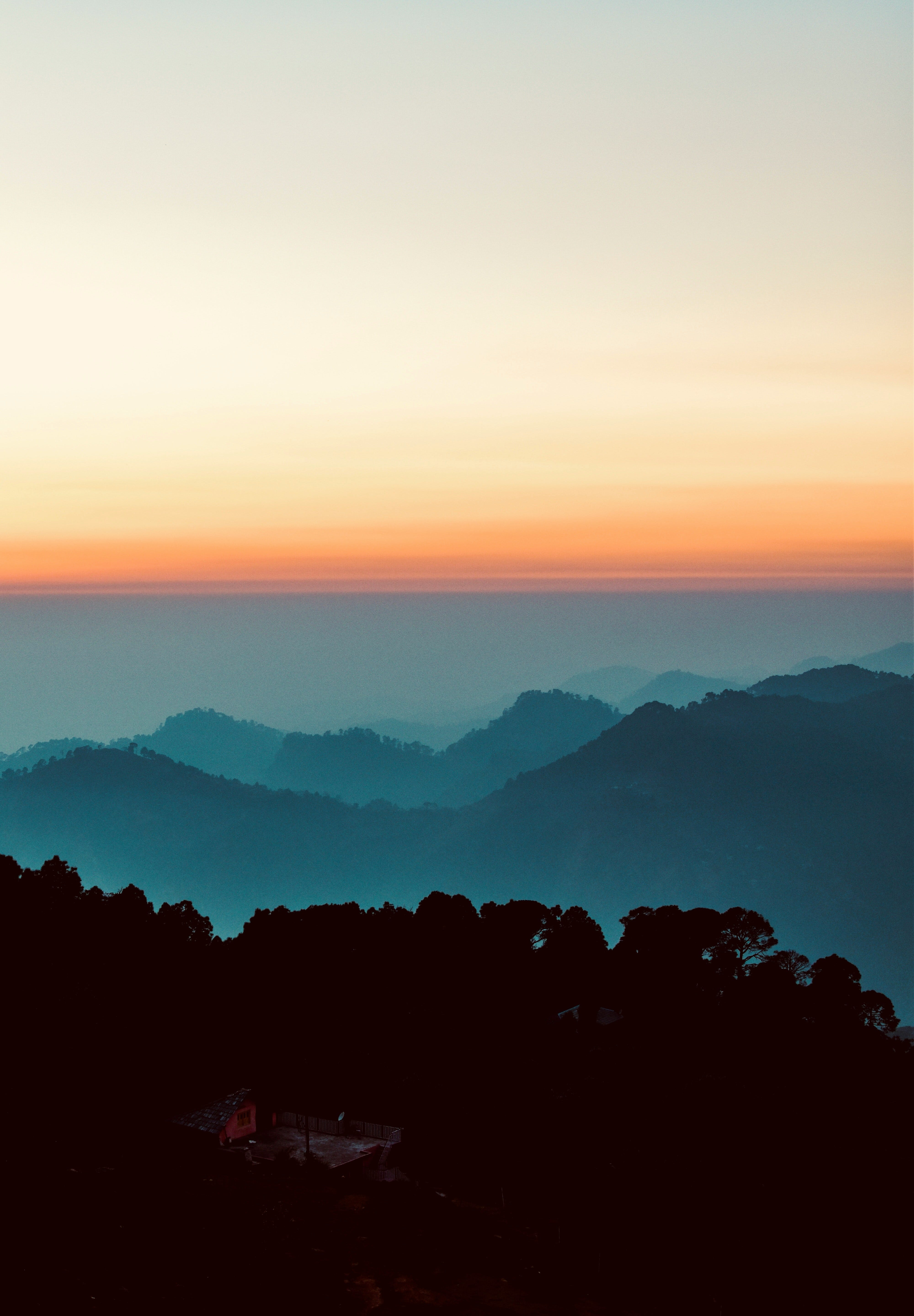
Monkeys carrying their babies on the wires, monks on motorcycles, flood-damaged Himalayan roads. Colourful lungta, prayer flags, spreading blessings through the air.
Gorgeous mountains dissolving into a stream of pink clouds. Cows resting in the middle of the road. Dharamshala feels oddly soothing, despite the usual intensity of Indian cities. Could it be the effect of the Himalayas, these majestic gradients of color and light? I was deeply moved to discover pieces of Tibetan culture here: the craftsmanship, the temples, the clothing, and the momos, dumplings in more circular shapes.
One of my recent interests has been to read the Dalai Lama’s writings. Admittedly, I’ve been a little obsessed. Why? Because he embodies such peace and stillness, and I think soothing my own inner turmoil had something to do with finding calm-inducing figures like him. I keep wondering what allows Buddhism to hold such enduring compassion for all sentient beings, what makes that idea take root and persist here. During my time in Dharamshala, I had to visit his temple, perched on the heights of McLeod Ganj. I unfortunately missed the morning ritual, when monks in red and orange robes gather to meditate and pray together.
Credit: Anbhinav
Rishikesh.
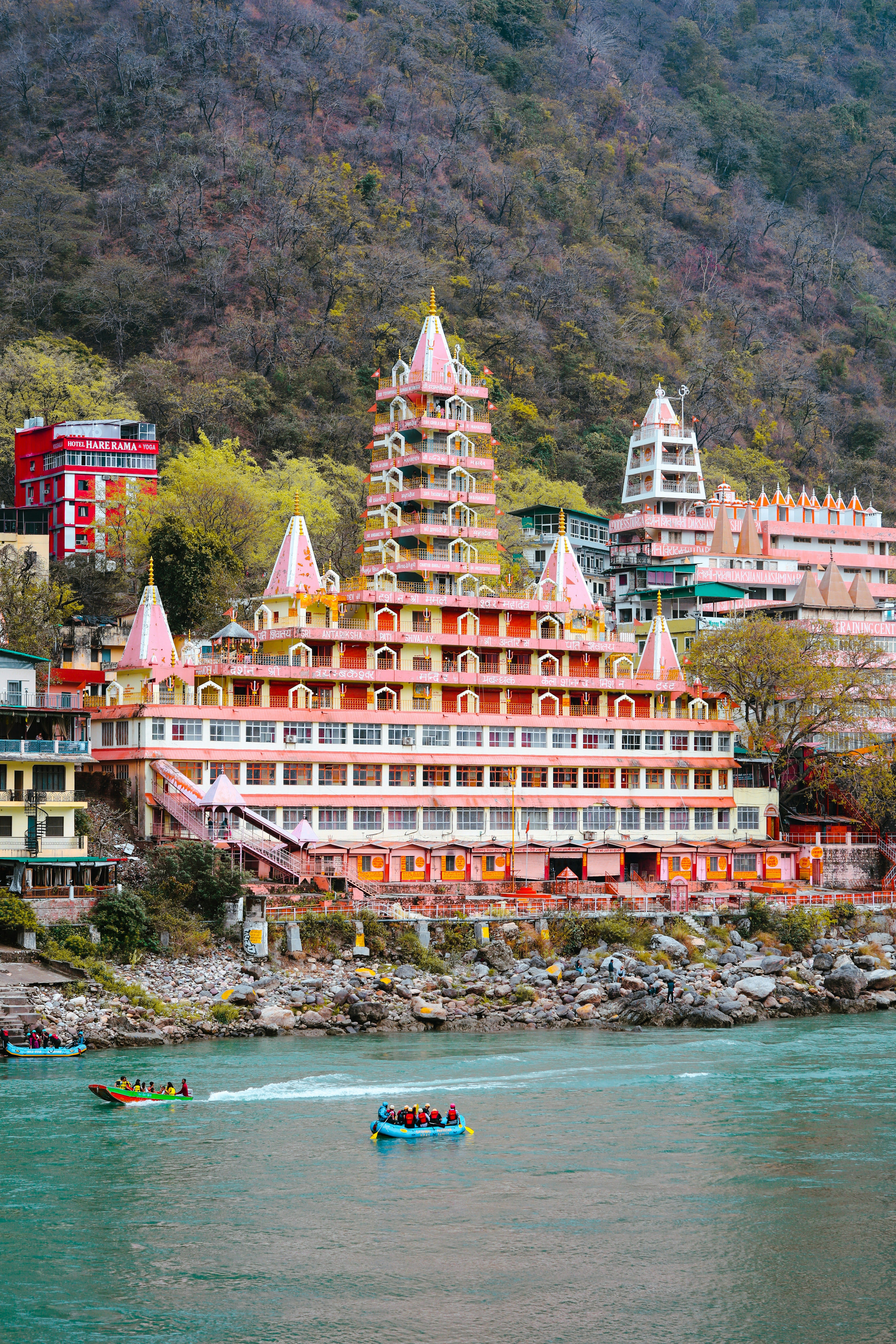
The Ganges. Yoga studios everywhere. So many foreigners. Japanese, Spanish, Americans, French, and just as many Indians from every corner of the country. It feels like I could be in Berlin or Bali, or both at once. Outside, on Rishikesh’s east bank of the Ganges, in the Tapovan area, the air hums with contradictions, a mixed economy of spirituality and tourism: vegan cafés, sound-healing flyers, reiki workshops. Westerners, myself included, wandering between ashrams and smoothie bowls, trying to unfold our spiritual selves. I oscillate between skepticism and fascination. Part of me wants to dismiss the scene as spiritual consumerism; another part recognizes its genuine nature. I feel self-conscious, like a walking cliché. But fascination wins over cynicism. There’s something undeniably alive here.
The sadhus in orange robes, on the scooter. The mix of heady and repulsive smells. The bright blue-green shimmer of the Ganges. People bathing in it, gripping a rope tightly so as not to drift away. The ear cleaner. The Kaju Katli shop, a sweet made from cashew nuts, where people queue to pay, no greetings, no thank yous, just boxes of sweets exchanged. The enormous cow walking calmly through the crowd, parting the way for us without hesitation, as we followed in its tracks.
The conversation with my teachers about learning to let go of yourself in a culture that primes you to become someone. The confusion between ideas of virtue and self-realization, and the attempt to undo the self altogether. I’m risking oversimplification with the claim I’m about to make, but in the West, identity often feels like a project, becoming someone, achieving things, bettering oneself. When I encountered Advaita Vedānta, it felt as if the direction was reversed: instead of constructing a self, you begin to question whether the self was ever separate to begin with. The process isn’t about finding your essence, but about seeing through the idea that you ever lacked one.
Credit: Avinash Kunar
Advaita Vedanta
We usually think of consciousness as something happening inside us, a property of the brain, a private interior world. Advaita Vedānta, an ancient Indian philosophy, turns this picture inside out. It proposes that awareness is not contained within us; we are contained within awareness.
Picture an ocean. Every thought, sensation, and object is a wave rising on its surface. Each wave looks distinct, one seems to be “me,” another “you,” another “the world.” Yet all move within the same continuous water. In this framework, consciousness is the ocean itself: the medium in which every experience unfolds.
Most contemporary accounts treat consciousness as emergent, a product of organized matter. Advaita proposes it is fundamental, the condition that allows anything to appear. Matter, mind, and perception are temporary shapes of the same underlying field, comparable to waves forming and dissolving on the sea.
Parallels exist across modern thought. Panpsychism and neutral monism in philosophy of mind explore consciousness as a basic feature of reality. Cognitive science describes perception as active construction, blurring the line between observer and observed. These perspectives do not confirm Advaita, yet they echo its central intuition.
The framework has limits. Its claims cannot be empirically tested, and it offers no mechanism for how unity gives rise to diversity. Taken rigidly, it can slide toward detachment, as if the waves no longer matter once one sees the ocean beneath them. Still, its philosophical force lies in the shift of assumption it proposes: what if consciousness isn’t a property of human minds, but the field to which we ourselves belong?
Whether awareness is emergent or fundamental remains unresolved. Advaita’s value may lie in the experiment it invites, to notice that everything known, from perception to thought, already takes place within the same field of knowledge. The ocean does not belong to the waves. The waves belong to the ocean.
Satsang
After years of being exposed to the ideas of Advaita Vedānta through the teachings of my beloved teachers, without ever quite grasping them, I found myself drawn to satsangs, daily gatherings where these ideas are explored and embodied through Swami Ji’s guidance.
The word satsang comes from Sanskrit: sat means “truth” or “reality,” and sangha means “community.” Literally, it means being in the company of truth. In practice, it’s simple: silence, meditation, and dialogue guided by Swami G, inviting reflection on the nature of self and consciousness.
In modern times, satsang has become interreligious, open to anyone interested in existential or contemplative inquiry. A satsang retreat usually involves several days of group sessions, quiet reflection, and long silences.
My first satsang with Swami Ji. was intense, just like his majestuous, imposing presence and his piercing gaze. I didn’t understand much, but something in the air felt charged, like the words mattered less than the stillness they pointed to.
Swami Ji. talks about unity, between beings, between sentients, between everything that exists. I try to take notes, then stop. Better to just listen. Thankfully, I didn’t come alone. My teachers come back year after year to sit with their Swami, to deepen their understanding of non-duality.
Do we even have secular places like this in the West, where people gather to inquire about their existential questions?
So here I am, at the foot of the Ganges, and it’s gorgeous.
Great post! Highly relate!